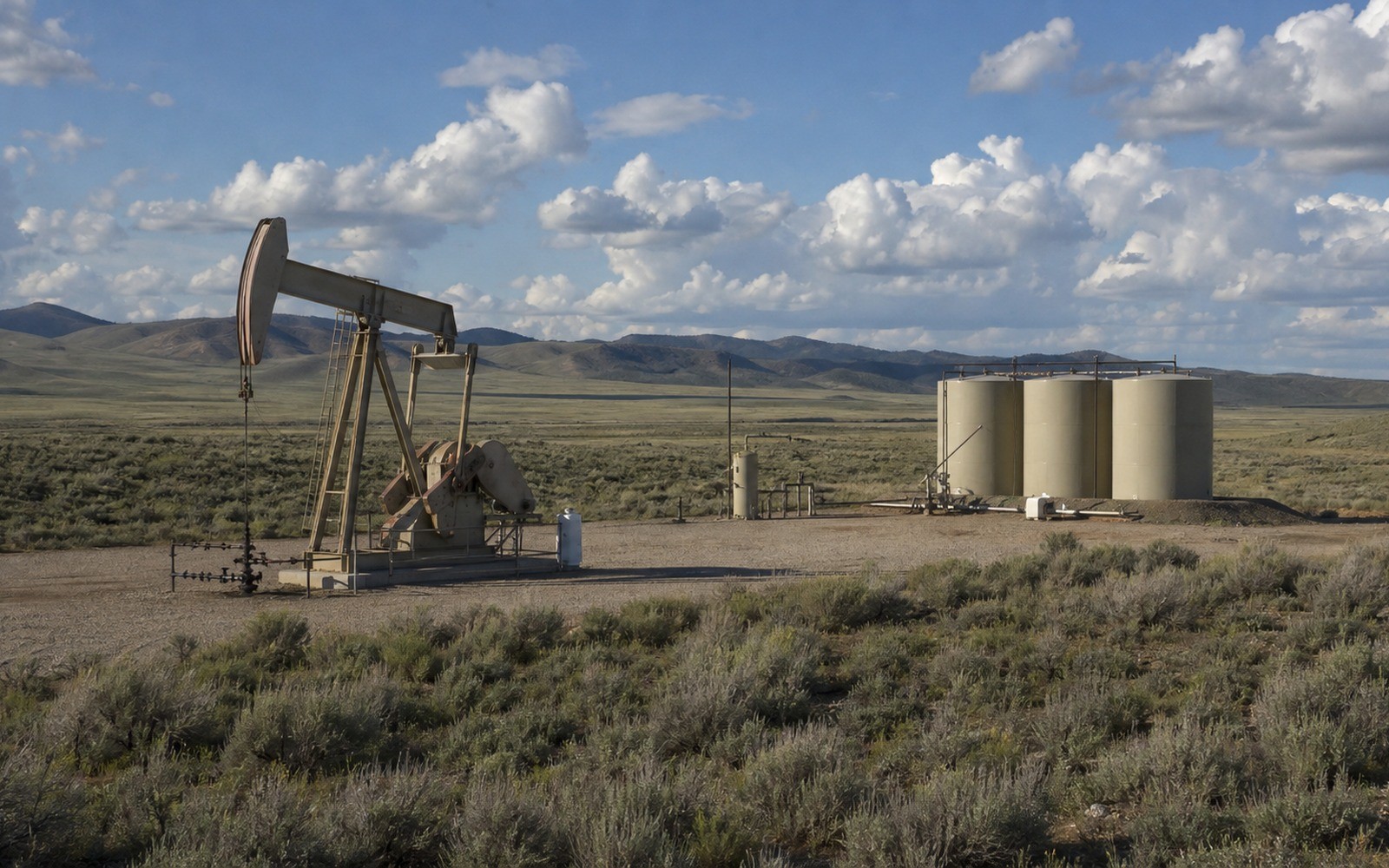
Green River Basin Mineral Rights
Cash buyer for Green River Basin mineral rights in Wyoming, including Pinedale and Jonah field acreage. Federal and fee minerals, fast close.
A lot of the mineral interests we see out of the Uinta Basin trace back to allotment land on the Ute reservation, which means ownership here often takes more digging than a typical deed search.
The Uinta sits in northeastern Utah across Duchesne and Uintah counties, and it produces a distinctive waxy black crude that has to stay warm enough to move, historically shipped out by rail rather than a typical pipeline network. The basin has two overlapping stories: a long legacy of vertical wells going back to the 1950s in fields like Altamont-Bluebell, and a newer wave of horizontal drilling that picked up meaningfully starting around 2015 as operators like Newfield, later folded into Ovintiv, and more recently Crescent Energy pushed into deeper, more continuous parts of the section.
We buy both kinds of interests: the older vertical production that a family has held for decades, and the newer horizontal units that came in over the last several years. They value differently, and we'll walk you through which one your interest actually is before we quote anything.
A large share of Duchesne and Uintah county minerals originated as individual allotments made to Ute tribal members under federal allotment policy in the early 1900s, later passing down through generations of heirs, some of whom still hold interests through the Bureau of Indian Affairs' probate and trust system rather than through a standard county deed. Where that's the case, a transaction can involve federal approval on top of the usual state title work, and timelines run longer than a typical closing.
Not every interest in the basin is allotment-derived, plenty trace through homestead patents and later private transfers with no federal involvement at all, but we ask early which situation you're in because it changes what documents we need and how long clearing title realistically takes.
Wells in the older Altamont-Bluebell trend have been producing for decades in some cases, and by now their decline curves are long, shallow, and well understood, which actually makes them easier to value with confidence even though the monthly volumes are modest. Newer horizontal units drilled over roughly the last decade behave more like a typical shale well, with a steeper initial decline followed by a longer tail, and the ones only a year or two into production take more careful modeling to value fairly since the curve hasn't fully shown its hand yet.
Either way, price realization matters as much as volume in the Uinta because of the crude's waxy quality and the historical dependence on rail takeaway rather than pipeline, which has meant Uinta crude sometimes prices at a discount to benchmark grades depending on transport availability. We factor that into any quote rather than assuming a straight WTI-equivalent number.
We'll want the legal description, the county, whether the tract is fee minerals or an allotment interest, and any royalty statement or division order you have. If you're working through a BIA trust account rather than receiving statements directly, tell us that up front, since it changes both the paperwork and the pace of any closing. From there we pull the well or unit's production and permitting history and quote against what that actually supports.
It's common for a Uinta Basin allotment interest to have split many ways over three or four generations, leaving individual heirs with a small fraction of the original acreage. A fractional share that small can be hard to do much with on your own, since it's rarely enough to influence leasing decisions, but it still has a value we can quote based on your specific percentage of the unit. We buy those fractional shares regularly, and we're direct about the fact that a small fraction means a smaller number, not a discounted one.
Your royalty statement or a BIA trust account statement usually tells you, and if you're unsure we can help figure out which category your ownership falls under.
Often yes, since transactions involving trust land typically require federal approval on top of the usual state closing steps, so we build that timeline in upfront.
Often yes. A long-producing well with a well-established decline curve can be valued with real confidence, even at modest current volumes.
The crude's waxy quality and historical reliance on rail rather than pipeline takeaway has meant it can trade at a discount depending on transport availability at the time.
Yes, we regularly buy fractional shares from heirs, and we'll quote your exact percentage rather than requiring a minimum size to consider an offer.
Keep the tract and title questions together
Mineral file
Cash buyer for Green River Basin mineral rights in Wyoming, including Pinedale and Jonah field acreage. Federal and fee minerals, fast close.
Cash buyer for Piceance Basin tight gas mineral rights in western Colorado. Mature, low-activity play, still worth a real offer. Fast close.
Direct buyer for Fayetteville Shale mineral rights in central Arkansas. Dry gas, mature wells, legacy checks. Cash offer with no listing hassle.
Tell us the county and state, owner name, whether the interest is producing or leased, and which records you already have.